The Complete Hamster Diet: Pellets, Fresh Food & Feeding Schedule
- What a Wild Hamster Actually Eats
- Macronutrient Targets by Species
- Pellets vs Muesli Mix: The Actual Trade-Off
- Safe Fresh Foods, With Realistic Portions
- Foods to Avoid Entirely
- Water: The Underrated Nutrient
- Feeding Schedule and Hoarding
- Reading the Body Condition Score
- A Worked Example: Building a Daily Ration for a Campbell's Dwarf
- The Five Feeding Mistakes That Cause Real Harm
- Summary
What a Wild Hamster Actually Eats
Before discussing pellets and percentages, it helps to understand what a hamster’s digestive system evolved to handle. Wild Syrian hamsters in the agricultural plains of northern Syria and southern Turkey eat a mixed diet: cereal grains and seeds (wheat, barley, lentils, chickpeas), green vegetation, roots, and — importantly — insects and other small invertebrates. Studies of wild hamster stomach contents consistently find animal matter making up a meaningful share of intake, particularly in spring and summer when insects are abundant and seeds are not yet ripe.
Two consequences follow from this that most commercial feeding advice gets wrong:
- Hamsters are omnivores, not seed-eaters. Protein from animal sources is a normal and necessary part of the diet, not an optional extra.
- They are foragers, not bowl-feeders. A hamster’s natural feeding pattern is dozens of small finds per night, carried back to a hoard. A full bowl of uniform pellets removes both the physical activity and the behavioural satisfaction.
Macronutrient Targets by Species
These are the ranges used by exotic-animal nutritionists for maintenance in adult, non-breeding hamsters. Never rely on a single brand’s marketing percentages; compare what is on the guaranteed analysis label against these ranges.
| Species | Protein | Fat | Fibre | Notes |
|---|---|---|---|---|
| Syrian | 16–19% | 5–7% | 8–12% | Most tolerant of variety; handles slightly higher fat |
| Campbell’s dwarf | 17–19% | 4–6% | 10–14% | Strongly prone to diabetes — keep sugars minimal |
| Winter White dwarf | 17–19% | 4–6% | 10–14% | Same diabetes risk as Campbell’s |
| Roborovski | 15–18% | 4–6% | 10–14% | Smallest; obesity risk from over-treating |
| Chinese | 16–19% | 4–6% | 9–13% | More insectivorous tendencies than Syrians |
Pregnant and nursing females need 19–22% protein and free access to food. Growing juveniles need the upper end of the protein range. A geriatric hamster (over 18 months) often benefits from slightly higher protein and easier-to-chew foods.
Pellets vs Muesli Mix: The Actual Trade-Off
The standard advice for the last two decades has been “feed a uniform pellet, because hamsters selectively feed from mixes and end up malnourished.” That advice is directionally correct but has been over-applied. Here is the honest breakdown:
Uniform pellets (extruded, all pieces identical)
- Cannot be selectively eaten — every bite is nutritionally complete.
- Best for hamsters prone to diabetes (dwarf species), because sugar content is controlled.
- Boring. Reduces foraging behaviour and can increase bar-biting and wheel-running in frustration.
- Quality varies enormously. A pellet with 14% protein and a high grain fraction is not adequate for a growing dwarf.
Muesli / seed mixes
- Encourages natural foraging and hoarding behaviour.
- Risk of selective feeding: the hamster eats the sunflower seeds and maize, leaving the high-calcium and high-fibre components. This is the single most common cause of “my dwarf hamster is fat but unhealthy.”
- Sunflower seeds and peanuts are very high in fat; a mix where these are 20% of the volume will make a dwarf hamster obese and diabetic.
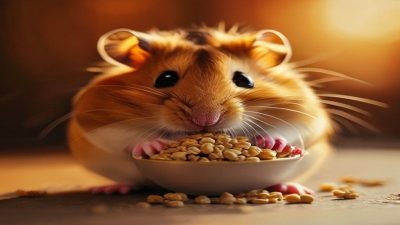
The practical compromise most experienced keepers use: a quality uniform pellet as the base (roughly 70–75% of intake by volume), plus a small measured amount of a low-sugar seed mix scattered in the bedding as foraging enrichment (20–25%), plus fresh vegetables and a protein source (5–10%). This gives you nutritional certainty plus behavioural benefit, without handing the hamster the ability to unbalance its own diet.
Safe Fresh Foods, With Realistic Portions
The most common fresh-food mistake is not the wrong vegetable — it is the wrong quantity. A hamster’s stomach is roughly the size of a thumbnail. Portions below are per hamster per day, adjusted for size: a Syrian gets the larger figure, a Roborovski about one third of it.
| Category | Examples | Daily portion |
|---|---|---|
| Leafy greens | Pak choi, spinach (small amounts), romaine, watercress, rocket | 1–2 thumbnail-sized pieces, 3–4 days/week |
| Root vegetables | Carrot, parsnip, sweet potato (cooked), celeriac | 1 small piece, 2–3 days/week |
| Brassicas | Broccoli floret, cauliflower leaf, kale | 1 small floret, 2–3 days/week |
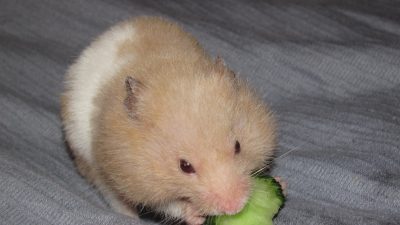
| Cucurbit | Cucumber, courgette, pumpkin | 1 piece the size of a fingernail; cucumber is watery — use sparingly |
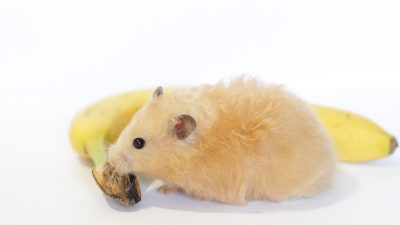
| Fruit (Syrian/higher-sugar tolerance) | Apple (no seeds), pear, blueberry, melon | 1 fingernail-sized piece, 1–2 days/week maximum |
| Protein | Mealworm, small cricket, plain cooked chicken, hard-boiled egg white | 1 mealworm or a pea-sized piece, 2–3 days/week |
| Hay / grass | Timothy or meadow hay, fresh grass (unsprayed) | Free access — supports fibre and tooth wear |
Introduce any new fresh food one at a time, over successive days, so that if diarrhoea appears you know the cause. Sudden introduction of a large volume of vegetables is a classic trigger of gut upset, especially in dwarf hamsters.
Foods to Avoid Entirely
- Citrus fruit — acidic enough to cause mouth and stomach irritation; hamsters cannot taste sweetness well and will still eat it.
- Onion, garlic, leek, chives — alliums damage red blood cells in rodents.
- Rhubarb, avocado, potato (raw), tomato leaves, apple seeds, stone-fruit kernels — toxic or contain cyanogenic compounds.
- Chocolate, sweets, biscuits, breakfast cereal, honey treats — in dwarf species these are a direct route to diabetes.
- Almonds and other bitter nuts — potential cyanide precursors, and far too fatty.
- Lettuce (especially iceberg) — almost entirely water, with essentially no nutritional value and a high risk of diarrhoea.
- Any “hamster yoghurt drop”, honey stick, or sugar-coated treat sold for rodents. Read the label; if sugar or glucose syrup appears in the first three ingredients, it is a diabetes delivery device.
Water: The Underrated Nutrient
A hamster drinks 5–15 ml of water per 100 g of body weight per day, more in warm weather or when nursing. Three practical consequences:
- Bottles need washing properly. A quick rinse is not enough. Biofilm builds inside the spout and the bottle within days, especially with vitamin-supplemented water. Use a bottle brush with hot water every two to three days; a monthly vinegar soak defeats mineral scale.
- Bowls are a legitimate alternative for Syrians but must be shallow and heavy, refreshed twice daily, and positioned away from bedding and food which hamsters will inevitably kick into it.
- Never add vitamins to the water routinely. It makes the water unpalatable (hamsters drink less), degrades within hours, and doses the animal unpredictably. If supplementation is needed, a vet will advise an oral or dietary route.
Feeding Schedule and Hoarding
Hamsters are crepuscular to nocturnal feeders. Food placed in the evening will be found overnight. A useful routine:
- Evening: refresh the pellet bowl and scatter foraging mix in the bedding.
- Morning: check whether the bowl is empty and check the hoard. Do not empty the hoard routinely — hamsters find this genuinely stressful. Instead check it weekly for spoilage: fresh vegetables cached in a warm nest can rot, and mouldy food causes illness.
- Weekly: weigh the hamster. This is the single most useful monitoring tool you have, because it detects problems before they become visible.
A hamster that is hoarding is a hamster demonstrating healthy natural behaviour. A hamster that stops hoarding and eats at the bowl is often stressed or unwell.
Reading the Body Condition Score
Rather than relying on a number on a scale alone, check body condition by feel. A hamster at ideal weight has a slightly rounded, torpedo shape. Run your thumb and forefinger along the flanks behind the front legs:
- Ideal: you can feel the ribs and the hip bones under a thin layer of fat, but they do not protrude sharply.
- Overweight: ribs cannot be felt at all; the hamster is noticeably round with shoulder fat pads in dwarf species.
- Underweight: spine and hips are sharp to the touch; the hamster feels like a small bag of bones. This is almost always a sign of dental disease, because a hamster with overgrown or broken incisors cannot eat.
Weight loss in a hamster that is still eating enthusiastically is a red flag for tooth problems, which are the most under-diagnosed issue in pet hamsters.
A Worked Example: Building a Daily Ration for a Campbell’s Dwarf
Suppose you have a 45 g Campbell’s dwarf hamster, one year old, no health issues.
- Base: 8 g of a uniform pellet with 18% protein, 5% fat, 12% fibre. This alone covers maintenance.
- Forage: 1.5 g of low-sugar seed mix — two millet sprays and a couple of pumpkin seeds. Scattered, not in a bowl.
- Fresh: one thumbnail of romaine on alternate days; one small broccoli floret twice a week.
- Protein: one mealworm three times a week.
- Treat: nothing containing sugar. If you want a training treat, use a single black sunflower seed or a pinhead of plain porridge oat.
That ration delivers roughly 18% protein, 5% fat, and about 1.8 g of fibre per day, which sits comfortably inside the targets above. Adjust the base down slightly if the weight creeps up over a month; adjust up if it falls.
The Five Feeding Mistakes That Cause Real Harm
- Free-feeding a muesli mix and assuming the hamster balances its own diet. It does not. It eats the fat.
- Treating “treats” as a routine part of the diet. Commercial treats are calorie-dense and sugar-heavy; for dwarfs this is a direct path to diabetes.
- Not providing any food requiring effort. A hamster that never forages develops behavioural problems — bar biting, wheel marathons, cage aggression.
- Ignoring teeth. Soft food does not wear incisors. Hay, grass, and hard pellets do. If you switch entirely to soft mash for a dental case, you must schedule regular vet burring.
- Changing food abruptly. Any switch should take 7–10 days at least, mixing old and new.
Summary
Feed a quality uniform pellet as the foundation, add a small amount of low-sugar mix as foraging enrichment, supply modest fresh vegetables and a genuine protein source, keep water clean and accessible, and weigh the animal weekly. That combination covers the macronutrients correctly, respects the hamster’s natural foraging drive, and keeps the two biggest long-term risks — dental disease and diabetes in dwarfs — under control.
- What a Wild Hamster Actually Eats
- Macronutrient Targets by Species
- Pellets vs Muesli Mix: The Actual Trade-Off
- Safe Fresh Foods, With Realistic Portions
- Foods to Avoid Entirely
- Water: The Underrated Nutrient
- Feeding Schedule and Hoarding
- Reading the Body Condition Score
- A Worked Example: Building a Daily Ration for a Campbell's Dwarf
- The Five Feeding Mistakes That Cause Real Harm
- Summary

These are all experiences I've gained from keeping hamsters, hope they help you~ Feel free to leave a comment if you have questions, I reply to all messages!