Safe Hamster Treats: What to Feed and How Often
- How Much Treats Should a Hamster Actually Get?
- Safe Hamster Treats Worth Feeding
- Fruits and Vegetables: The Right Way to Use Them
- Protein Treats for Hamsters
- Treats to Avoid Completely
- Special Care for Dwarf Hamsters and Diabetes
- How to Feed Treats Safely
- Frequently Asked Questions
- What is the healthiest treat for a hamster?
- Can hamsters eat fruit every day?
- Are mealworms good for hamsters?
- Can I give my hamster cheese?
- Why are yogurt drops bad for hamsters?
- How do I know if a treat made my hamster sick?
Quick answer: Safe hamster treats include small pieces of vegetables, a little fruit, fresh herbs, plain cooked egg or chicken, the occasional mealworm, and a few seeds or nuts. Treats should make up no more than about 10% of the diet and be given once or twice a week, in portions no larger than your hamster’s ear. Never feed chocolate, citrus, onion, garlic, raw potato, or sugary human food.
Handing your hamster a treat is one of the great small pleasures of keeping one. That tiny, serious face as it stuffs a bit of broccoli into its cheek pouches is worth the effort. But treats are also where well-meaning owners do the most damage, often without realizing it, because almost every “hamster treat” sold in pet stores is far sweeter and richer than a hamster should ever eat.
I once went through a phase of giving my dwarf hamster a “yogurt drop” most evenings because he loved them and they were sold right next to the food. By the time I understood that those drops are little more than sugar and dairy, he had gained weight and I had to cut him back hard. The lesson stuck: a treat your hamster adores is not automatically a treat that is good for it.
This guide gives you a clear list of what is safe, how much to feed, and what to avoid entirely. It builds on the basics in our hamster food safety guide, which is worth bookmarking as a quick reference.
How Much Treats Should a Hamster Actually Get?
The single most useful rule is the 10% rule. A hamster’s diet should be built around a complete staple food, with fresh foods and treats making up only a small fraction — roughly 10% of intake, and no more. That keeps the balance tilted toward nutrition rather than fun.
In practice, that means treats are occasional, not daily, and always small. A portion should be no bigger than your hamster’s ear, which is a surprisingly tiny amount. One or two treats per week is plenty for most adult hamsters. More than that and you risk obesity, diabetes (especially in dwarf hamsters), and a hamster that stops eating its proper food in favor of waiting for the good stuff.
Treats fit into two roles. They are enrichment, giving your hamster something novel to investigate, and they are a training aid, a way to build trust during taming. Neither requires a lot of them.
Safe Hamster Treats Worth Feeding
The table below lists treats I consider safe in sensible amounts. Portions are a rough guide — err on the smaller side, especially for dwarf hamsters.
| Treat | Portion size | How often | Notes |
|---|---|---|---|
| Broccoli | A tiny floret | Once or twice a week | Can cause gas in large amounts |
| Carrot | A piece the size of a pea | Once or twice a week | Higher in sugar than leafy greens |
| Cucumber | A small slice | Once or twice a week | Mostly water; remove if uneaten |
| Bell pepper | A small piece | Once or twice a week | Well tolerated by most hamsters |
| Apple (no seeds) | A small piece | Once a week | Seeds must be removed; sugary |
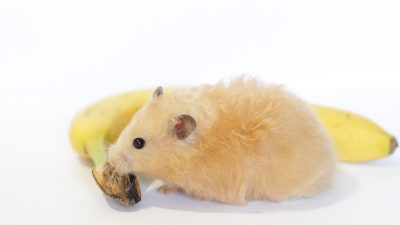
| Banana | A sliver | Occasionally | Very sugary; keep it rare |
| Blueberry or strawberry | Half a small berry | Once a week | Fruit should stay occasional |
| Fresh parsley or basil | A small leaf | Once or twice a week | Wash thoroughly first |
| Plain cooked egg | A tiny piece | Once a week | No salt, oil or seasoning |
| Cooked, unseasoned chicken | A shred | Once a week | Cool completely and keep it plain |
| Mealworm | One, dried or fresh | Once a week | Great source of protein |
| Sunflower or pumpkin seed | One or two | Twice a week | Very high in fat; count them |
| Plain air-popped popcorn | A single piece | Occasionally | No butter, salt or sugar |
| Rolled oats | A small pinch | Once or twice a week | Dry oats only, not porridge |
Two habits protect you here: always wash fresh produce, and always remove uneaten fresh food within a few hours so it does not spoil in the cage.
Fruits and Vegetables: The Right Way to Use Them
Fresh vegetables should be the backbone of your treat rotation because they add fiber, vitamins and hydration without the sugar load of fruit. Leafy greens and crunchy vegetables such as broccoli, cucumber and bell pepper are excellent choices in small amounts. Our dedicated vegetable list covers the safe options in detail.
Fruit is where sugar becomes a real concern. A hamster that eats too much fruit can become overweight, and dwarf hamsters are especially vulnerable because of their risk of diabetes. Treat fruit as a genuine occasional indulgence: a small piece once a week, not a daily habit. The safe fruit list gives species-appropriate options and portion guidance.
One word of caution on fruit seeds and pits. Apple seeds, and stone-fruit pits, contain compounds that are toxic, so core and deseed thoroughly before offering any fruit.
Protein Treats for Hamsters
Because hamsters are omnivores, protein treats suit them well and can be a healthier choice than sweet ones. A plain piece of cooked egg, a shred of unseasoned chicken, or a single mealworm all go down well and provide valuable protein. This is especially useful for young hamsters, pregnant or nursing females, and hamsters recovering from illness, since these groups have higher protein needs than a healthy adult.
Whatever protein you offer, it must be plain. No salt, no oil, no sauces, and no seasoning of any kind. A scrap of the roast with the gravy still on it is not a treat; it is a risk.
Treats to Avoid Completely
Some foods are simply not safe. Leave all of these off the menu:
- Chocolate — toxic to hamsters, even in small amounts.
- Citrus fruits such as lemon, orange and lime — too acidic.
- Onion, garlic, leek and chives — can damage red blood cells.
- Raw potato and potato leaves — contain a toxin.
- Rhubarb and avocado — not safe for hamsters.
- Almonds and any bitter nuts — some contain compounds that are toxic.
- Sugary or salty human food — candy, chips, crackers and cake have no place in a hamster’s diet.
- Pet-store “yogurt drops” and honey treats — high in sugar and dairy; best avoided.
- Raw beans and large amounts of dairy — hard to digest and can cause gas and loose stool.
- Grapes and raisins — best avoided, as their safety is debated.
If you are ever unsure about a food, the safer choice is not to feed it. The cost of a missed treat is nothing; the cost of a bad one can be serious.
Special Care for Dwarf Hamsters and Diabetes
Dwarf hamsters, especially Campbells and Winter Whites, are genetically prone to diabetes. For them, the rules tighten. Avoid fruit, honey, molasses and any sweetened treats altogether, and keep even sugary vegetables such as carrot and corn to a minimum. Protein and low-sugar vegetables make much better choices. If your hamster is overweight, drinking a lot, or urinating more than usual, see a vet and read our guide to hamster diabetes.
How to Feed Treats Safely
How you give a treat matters as much as what it is.
- Feed by hand where possible. It builds trust and lets you feel whether your hamster is eager and healthy.
- Keep portions tiny. If in doubt, halve it.
- Remove uneaten fresh food after a few hours so it does not spoil.
- Count the oily and sugary treats. Seeds, nuts and fruit add up quickly across a week.
- Watch the droppings. A soft stool after a new treat is your signal to pull back.
- Weigh your hamster regularly to catch creeping weight gain early.
Treat time done this way stays a pleasure for both of you, and it keeps treats in their proper place as a small part of a bigger picture. If you are unsure how a new food fits your hamster’s situation, the safest approach is to build the treat around a complete staple diet rather than around what your hamster happens to love.
Frequently Asked Questions
What is the healthiest treat for a hamster?
Low-sugar vegetables such as broccoli, cucumber and bell pepper, plus occasional plain protein like a bit of cooked egg or a mealworm. These give nutrition and enrichment without loading your hamster with sugar or fat.
Can hamsters eat fruit every day?
No. Fruit is high in sugar and should be an occasional treat, roughly once a week in a small piece. Daily fruit can cause weight gain and is especially risky in diabetes-prone dwarf hamsters.
Are mealworms good for hamsters?
Yes, in moderation. A single mealworm once a week is a good protein treat, particularly for growing, pregnant, or recovering hamsters. Dried mealworms are convenient, but keep them occasional because they are also fairly high in fat.
Can I give my hamster cheese?
Only a very tiny amount, occasionally. Many hamsters are lactose-intolerant, and too much dairy causes digestive upset. Plain protein treats are generally a better choice.
Why are yogurt drops bad for hamsters?
They are typically loaded with sugar and dairy, and dairy is hard for many hamsters to digest. Despite being sold as treats, they behave more like candy and can contribute to obesity and diabetes.
How do I know if a treat made my hamster sick?
Watch for loose or runny droppings, loss of appetite, or a change in energy in the hours after a new food. If symptoms are severe or last more than a day, contact an exotic vet rather than trying to feed your way out of it.
Treats are one of the nicest ways to connect with a hamster, and they can be genuinely good for it when chosen well. Keep them small, keep them occasional, lean toward vegetables and plain protein, and avoid sugar and the long list of unsafe foods. Get that balance right and every treat becomes a healthy little moment. For the full picture, our diet and nutrition section has everything else you will need.
- How Much Treats Should a Hamster Actually Get?
- Safe Hamster Treats Worth Feeding
- Fruits and Vegetables: The Right Way to Use Them
- Protein Treats for Hamsters
- Treats to Avoid Completely
- Special Care for Dwarf Hamsters and Diabetes
- How to Feed Treats Safely
- Frequently Asked Questions
- What is the healthiest treat for a hamster?
- Can hamsters eat fruit every day?
- Are mealworms good for hamsters?
- Can I give my hamster cheese?
- Why are yogurt drops bad for hamsters?
- How do I know if a treat made my hamster sick?

These are all experiences I've gained from keeping hamsters, hope they help you~ Feel free to leave a comment if you have questions, I reply to all messages!