Homemade Hamster Food Mix: Ratios, Recipes and Mistakes to Avoid
- Why Make Your Own Mix at All?
- The Numbers That Actually Matter
- Building the Mix: Base, Protein, Extras
- The grain and seed base
- The protein portion
- Dried and fresh extras
- A Simple Starting Recipe
- Feed Fresh Food Separately, Not Mixed In
- The Five Mistakes That Ruin Homemade Mixes
- When Homemade Is the Wrong Choice
- Frequently Asked Questions
- Can a hamster live on a homemade mix alone?
- How much should I feed each day?
- Is muesli-style mix bad for hamsters?
- Which seeds should I limit?
- Can I add fruit to the mix?
- How long does a homemade mix keep?
Quick answer: A homemade hamster food mix can absolutely work, but only if you balance it the way a good commercial diet is balanced: roughly 16–19% protein, 4–7% fat and 6–15% fiber, built from a plain grain-and-seed base, a protein source, and a measured amount of dried or fresh vegetables. The mistakes that ruin most homemade mixes are going too heavy on fatty seeds like sunflower and peanuts, skipping variety, and mixing wet fresh food straight into the dry base.
There is a certain appeal to making your hamster’s food yourself. You know exactly what goes in, you can tweak it for a picky eater, and it feels more hands-on than tipping pellets out of a bag. When I first tried it four years ago, I filled a jar with a cheerful mix of seeds and oats and felt like a proper small-animal chef.
Then my Syrian, Nugget, started getting chubby and leaving the healthy bits behind. I had built a mix that tasted wonderful and was nutritionally lopsided. That is the trap with homemade food: it is easy to make something your hamster loves, and harder to make something that keeps it healthy for three years.
This guide gives you the actual ratios, a starting recipe you can adjust, and the specific mistakes that turn a well-meaning homemade mix into a problem. It is aimed at owners who want to feed a homemade base or supplement a commercial one — not at replacing veterinary advice for a hamster that is already unwell.
Why Make Your Own Mix at All?
Before you commit, it helps to be honest about the trade-offs. Commercial mixes and pellets exist for good reasons, and a homemade mix is not automatically better.
- Control. You decide the ingredients, so you can avoid fillers, artificial colors and the molasses-heavy muesli mixes that are common in pet stores.
- Variety. A well-built mix offers more texture and foraging interest than plain pellets, which matters for a species that spends much of the night foraging.
- Freshness. You can buy smaller quantities and avoid a bag that has been sitting on a shelf for a year.
- The downside. Getting the balance right takes real effort, and a careless homemade mix can be deficient in vitamins, minerals or the right protein level.
If that trade-off sounds worth it, the rest of this article is about doing it properly.
The Numbers That Actually Matter
Every serious hamster diet is built around a few targets. These are the ranges most small-animal nutrition references agree on for a healthy adult hamster, and they are what you are aiming for once you average the whole mix out.
| Nutrient | Target range | Why it matters | Common source |
|---|---|---|---|
| Protein | 16–19% | Muscle, coat, tissue repair | Pellets, egg, mealworms, legumes |
| Fat | 4–7% | Energy and coat condition | Seeds, nuts, a little oil-bearing grain |
| Fiber | 6–15% | Gut health and digestion | Oats, grasses, dried greens, vegetables |
| Calcium | Balanced with phosphorus | Bones, teeth, nursing mothers | Leafy greens, fortified pellets |
| Water | Always available | Prevents dehydration and hard stool | Bottle or bowl, fresh daily |
Notice that fat is the lowest number on the list. This is where homemade mixes go wrong most often, because fatty seeds are also the tastiest ones. A hamster will happily eat sunflower seeds all night and leave the fibrous parts behind, which throws your careful averages out the window.
Building the Mix: Base, Protein, Extras
Think of a homemade mix as three layers. Get the proportions of each roughly right and you are most of the way there.
The grain and seed base
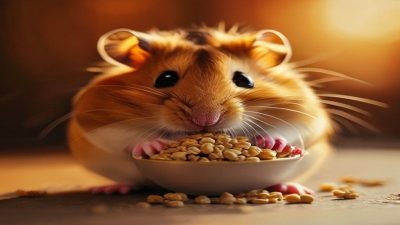
This is the bulk of the mix — around 60–70% by volume. Use plain, unsweetened, unflavored grains and a small variety of seeds:
- Rolled or steel-cut oats
- Pearled barley, millet, canary seed
- Buckwheat, quinoa (rinsed, dry)
- A modest amount of pumpkin seeds and a few striped sunflower seeds — treated as a minority, not the headline
Keep the fatty seeds to a small proportion. Pumpkin and sunflower seeds are fine in a mix, but they should be the accent, not the base.
The protein portion
Aim for about 15–20% of the mix. Good options that store well dry include plain cooked-and-dried egg, freeze-dried or dried mealworms, and small amounts of dried legumes. For live eaters, a fresh mealworm once or twice a week is a genuine treat. Our guide to hamster protein sources breaks down how much protein each life stage needs, including pregnant and nursing mothers.
Dried and fresh extras
The remaining 10–15% is where variety and micronutrients come from:
- Dried vegetables such as carrot, parsnip and beetroot in small amounts
- Dried herbs like parsley, coriander and dandelion
- A few sunflower-free dried grasses for fiber
- Fresh vegetables offered separately, not mixed into the dry jar
A Simple Starting Recipe
These are volumes, not weights, because most owners measure in scoops. Adjust slowly and watch your hamster’s condition over several weeks rather than changing everything at once.
- 6 parts base grain. A mix of oats, barley and millet in roughly equal parts.
- 1 part canary or budgie seed. Cheap, varied and low in fat.
- 1 part protein. Dried egg and/or dried mealworms.
- Half a part fatty seeds. Pumpkin seeds and a few sunflower seeds.
- 1 part dried vegetables and herbs. Keep it colorful but modest.
Mix it thoroughly so the good bits cannot be picked out and the boring bits cannot be ignored. Store it in an airtight container in a cool, dark place and use it within about six weeks, because seeds and dried vegetables slowly lose nutritional value and can go rancid.
Feed Fresh Food Separately, Not Mixed In
The single biggest practical mistake is mixing wet food into the dry base. Fresh vegetables release moisture, which encourages mold and spoilage in a jar of dry mix. Keep the dry base dry, and offer fresh food in a separate dish or as a hand-fed treat.
For safe portions and a full list of what is and is not suitable, our hamster food guide is the fastest reference. Fresh food should make up only a small part of the daily diet — a thumbnail-sized piece of vegetable most days is plenty for a dwarf hamster.
The Five Mistakes That Ruin Homemade Mixes
- Too many fatty seeds. Sunflower, peanut and similar seeds are treats. Loading the base with them leads to obesity and, in dwarf species, can worsen blood-sugar problems.
- No variety. The same boring mix every week can miss micronutrients. Rotate grains, proteins and vegetables over time.
- Forgetting calcium and vitamin balance. A grain-and-seed mix with no leafy greens or fortified pellets can be short on calcium. Nursing mothers need extra attention here.
- Using human-seasoned or processed foods. Salted nuts, bread, cereal with sugar, and anything flavored are not hamster food.
- Leaving fresh food in the cage. Uneaten fresh food should come out within a few hours, or it will spoil and attract pests.
One more mistake deserves its own line: assuming a homemade mix replaces all other food. Many owners use a high-quality pellet as the nutritional backbone and add a homemade mix for enrichment. That hybrid approach is usually safer than a fully homemade diet, which is hard to balance perfectly without lab analysis.
When Homemade Is the Wrong Choice
There are situations where you should not tinker with the diet at all. If your hamster is a dwarf species prone to diabetes, a growing youngster, a pregnant or nursing mother, or a hamster recovering from illness, a carefully formulated pellet or a vet-recommended diet is the safer path. Our guide to hamster diabetes explains why sugar and high-fat seeds are a particular risk for these animals.
If your hamster has been losing weight, is unusually thirsty, or has other symptoms alongside a diet change, treat that as a health question rather than a food question and speak to an exotic vet. A balanced diet is the goal, but it is not a treatment.
Frequently Asked Questions
Can a hamster live on a homemade mix alone?
It is possible, but hard to do well, because balancing vitamins and minerals by hand is difficult. Most owners get better results using a quality pellet as the base and adding a homemade mix for variety and enrichment.
How much should I feed each day?
Roughly one to two tablespoons of mix per day for a Syrian, less for a dwarf, with the exact amount adjusted to keep your hamster at a healthy weight. Fresh vegetables are a small extra on top.
Is muesli-style mix bad for hamsters?
It is not automatically bad, but many muesli mixes are too high in sugary and fatty pieces, and hamsters tend to eat those first and leave the nutritious parts. Read the label, or build your own low-fat mix instead.
Which seeds should I limit?
Sunflower seeds, peanuts and other oil-rich seeds should stay a small part of the mix. They are the most palatable and the easiest to overfeed, so use them as occasional treats.
Can I add fruit to the mix?
Occasionally, in very small amounts, and never for dwarf hamsters prone to diabetes. Fruit is high in sugar and is better treated as a rare treat than a daily component of the mix.
How long does a homemade mix keep?
Aim to use it within about six weeks and store it airtight in a cool, dark place. If it smells stale or musty, throw it out rather than feeding it to your hamster.
If you want to compare your homemade mix against reputable commercial options before you commit, our complete diet guide shows how pellets, mixes and fresh food fit together, and the diet and nutrition section has the rest of the feeding basics. Start simple, change one thing at a time, and let your hamster’s weight and coat tell you whether your mix is working.
- Why Make Your Own Mix at All?
- The Numbers That Actually Matter
- Building the Mix: Base, Protein, Extras
- The grain and seed base
- The protein portion
- Dried and fresh extras
- A Simple Starting Recipe
- Feed Fresh Food Separately, Not Mixed In
- The Five Mistakes That Ruin Homemade Mixes
- When Homemade Is the Wrong Choice
- Frequently Asked Questions
- Can a hamster live on a homemade mix alone?
- How much should I feed each day?
- Is muesli-style mix bad for hamsters?
- Which seeds should I limit?
- Can I add fruit to the mix?
- How long does a homemade mix keep?

These are all experiences I've gained from keeping hamsters, hope they help you~ Feel free to leave a comment if you have questions, I reply to all messages!