Chinese Hamster Care Guide: Temperament, Diet and Setup

- What Exactly Is a Chinese Hamster?
- Temperament: Gentle but Reserved
- Setting Up the Right Cage
- Cage Size and Bar Spacing
- Bedding, Wheel and Sand Bath
- Diet and Feeding
- Handling and Taming a Chinese Hamster
- Health and Lifespan
- Frequently Asked Questions
- Are Chinese hamsters good pets?
- Can Chinese hamsters live together?
- How long do Chinese hamsters live?
- Are Chinese hamsters the same as dwarf hamsters?
- Do Chinese hamsters get diabetes?
- Why does my Chinese hamster bite?
Quick answer: The Chinese hamster is a small, mouse-like hamster with a longer tail and a grey-brown agouti coat, kept singly because it is territorial. It needs a large cage with narrow bar spacing, deep bedding, a small wheel, a sand bath and a low-sugar diet. Chinese hamsters are gentle but quick and hard to handle, live around two to three years, and are prone to diabetes, so keep sweet treats rare. If you want a hands-on pet, be ready to go slow.
The Chinese hamster is the odd one out among pet hamsters, and that is exactly why some owners fall for it. It is not a dwarf, it is not a Syrian, and it does not really look like either. With its slender body, longer tail and grizzled grey-brown coat, it reads more like a large mouse than a hamster — until it stuffs its cheeks and you remember what you are looking at.
I kept a pair of Chinese hamsters for a couple of years, and the first thing I learned was that the pet store advice was wrong in both directions. They are not as easy to handle as a calm Syrian, and they do not want company the way some dwarf species do. Get the setup right, though, and they are rewarding, busy little animals with a charm of their own.
This guide covers what the Chinese hamster actually is, how to house and feed it, how to tame it without stress, and the health issues worth watching.
What Exactly Is a Chinese Hamster?
The Chinese hamster (Cricetulus griseus) is a separate species from both the Syrian and the dwarf hamsters, though it is often grouped loosely with the dwarfs because of its size. It grows to roughly 8–12 centimeters of body, plus a tail of 2–3 centimeters that is noticeably longer than a dwarf’s stub.
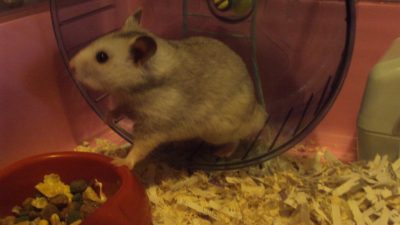
The coat is agouti grey-brown with a darker stripe down the back and a pale belly, and adults often develop a slightly leaner, more tucked-in look than a rounded Campbell’s or Winter White. The tail is the giveaway: if it looks like a small mouse tail, you are almost certainly looking at a Chinese hamster. For a side-by-side of the small species, our dwarf hamster comparison keeps the differences straight.
Temperament: Gentle but Reserved
Chinese hamsters have a reputation for being nippier than Syrians, but that is only half the story. They are naturally shy and nervous, and a nervous hamster nips out of fear, not aggression. A well-tamed adult can be calm and even curious, but it takes patience and calm, low-stress handling to get there.
They are also territorial. Unlike some dwarf species that can live in groups, the Chinese hamster should be kept alone. Housing two together, even a male and female outside breeding, invites fighting, and a stressed Chinese hamster will also scent-mark heavily. Give one hamster its own space and it settles down faster.
Setting Up the Right Cage
Chinese hamsters are small and fast, which makes the wrong cage genuinely dangerous — they can squeeze through bar spacing that a Syrian could never pass.
Cage Size and Bar Spacing
Bar spacing of 0.6 centimeters or narrower is a must; anything wider and a Chinese hamster can escape through the bars. Floor space should be generous: aim for at least 400 square inches (around 2,600 square centimeters), and more if you can. A tank or a large plastic-base cage with a secure lid both work well. Before buying, compare options in our hamster supplies comparison.
Bedding, Wheel and Sand Bath
- Deep bedding: at least 15–20 centimeters of a safe paper-based or aspen bedding so the hamster can tunnel. Never use fluffy or cotton-type bedding, which can wrap around limbs and cause serious injury.
- A small wheel: a solid-surface wheel around 16–18 centimeters. Chinese hamsters run fast and a wheel that is too small bends the spine.
- A sand bath: a shallow dish of fine sand for cleaning the coat. They groom in sand, never in water.
- Hides and chews: a few small hides, cardboard tubes and safe wood chews to keep teeth worn and stress low.
- Narrow bar spacing or a solid lid: non-negotiable for this species.
Diet and Feeding
Chinese hamsters do well on the same general principles as other hamsters, with one important caution: they share the dwarf tendency toward diabetes. A diet built around sugar is the fastest way to a sick hamster.
Feed a measured portion of a quality low-sugar hamster mix or pelleted food as the base — roughly one to two tablespoons per day for an adult, adjusted to keep the hamster at a healthy weight. Use vegetables for the fresh-food portion and keep fruit to a rare treat.
| Food category | Examples | How often |
|---|---|---|
| Staple mix / pellets | Quality low-sugar hamster mix or pellets | Daily, measured |
| Vegetables | Broccoli, cucumber, carrot, leafy greens | Small piece daily or every other day |
| Protein | Cooked egg, plain chicken, mealworms | A few times a week |
| Fruit | Apple, pear, a tiny piece of banana | Rare treat, sugar counted |
| Sugary treats | Honey sticks, dried fruit, yogurt drops | Avoid — diabetes risk |
Check that any fresh food is safe before you offer it. Our hamster food guide lists what is safe and what is not, which is worth bookmarking if you are new to the species.
Handling and Taming a Chinese Hamster
This is the part that trips up new owners. Chinese hamsters are quick, and an untamed one will nip and bolt. Taming works, but slowly, and it goes best if you respect the hamster’s pace.
- Let it settle for the first week. No handling, minimal disturbance, just food and clean water. Moving is stressful on its own.
- Talk to it daily. Sit by the cage and speak softly so it learns your voice and scent are safe.
- Offer food from your fingers. Let it take a treat from your hand before you ever try to pick it up.
- Scoop, do not grab. When it is ready, cup it in both hands low over a soft surface, and never lift high or squeeze.
- Keep sessions short. A calm two-minute session beats a stressful ten-minute one. Build up over weeks.
If a Chinese hamster bites, it is almost always fear or rough handling. Do not punish it — back off, lower your hands, and go back a step. A tamed Chinese hamster can be lovely to hold; it just takes more patience than a well-bred Syrian.
Health and Lifespan
A cared-for Chinese hamster typically lives around two to three years. The health issues to watch are largely the same as for other small hamsters.
- Diabetes: the standout risk for this species. Excessive drinking, heavy urination and weight change are warning signs, so a low-sugar diet is preventive care, not a preference.
- Overgrown teeth: common to all hamsters, and best prevented with safe chews and hard pellet food.
- Respiratory infections: sneezing, wheezing or a clicking sound when breathing usually needs a vet.
- Wet tail and digestive upset: a wet, dirty rear end is serious in a small hamster — act quickly.
- Injuries from falls: the biggest handling risk, because a quick Chinese hamster can leap without warning.
Weigh your hamster on a kitchen scale weekly and note any loss. Because these animals are small, illness can move fast. If your hamster shows pain, stops eating, or has trouble breathing, and if symptoms are severe or persistent, see an exotic vet — a small-pet specialist — as soon as you can rather than waiting to see if it passes.
Frequently Asked Questions
Are Chinese hamsters good pets?
Yes, for the right owner. They are gentle but shy and quick, so they suit someone patient who is happy to tame slowly. They are less forgiving of rough handling and of being kept in pairs than many beginners expect.
Can Chinese hamsters live together?
No. Chinese hamsters are territorial and should be housed alone. Pairing two together usually leads to fighting and stress, so give each hamster its own cage.
How long do Chinese hamsters live?
With good care, around two to three years. That is longer than most dwarf hamsters and shorter than a well-kept Roborovski, but individual lifespan still depends on genetics, diet and housing.
Are Chinese hamsters the same as dwarf hamsters?
No. The Chinese hamster is a separate species with a longer tail and a more mouse-like build. It is often grouped with the dwarfs for convenience, but it is not a true dwarf.
Do Chinese hamsters get diabetes?
They are prone to diabetes, similar to Campbell’s and Winter White dwarfs. Feeding a low-sugar diet, keeping treats minimal and monitoring for excessive drinking and urination all reduce the risk.
Why does my Chinese hamster bite?
Usually fear. Chinese hamsters are quicker to nip than Syrians when they feel nervous or handled roughly. Tame it slowly with food rewards and calm, low handling, and the biting usually fades as trust builds.
The Chinese hamster is not the easiest first hamster, but it may be one of the most interesting. Set it up alone in a secure cage with deep bedding, feed it for the long haul with a low-sugar diet, and tame it slowly on its own terms, and you will have a lively, charming companion for two to three years. If you are still weighing up which small hamster is right for you, browse the breed guide section to compare the Chinese hamster with the Syrian and the true dwarfs before you decide.
- What Exactly Is a Chinese Hamster?
- Temperament: Gentle but Reserved
- Setting Up the Right Cage
- Cage Size and Bar Spacing
- Bedding, Wheel and Sand Bath
- Diet and Feeding
- Handling and Taming a Chinese Hamster
- Health and Lifespan
- Frequently Asked Questions
- Are Chinese hamsters good pets?
- Can Chinese hamsters live together?
- How long do Chinese hamsters live?
- Are Chinese hamsters the same as dwarf hamsters?
- Do Chinese hamsters get diabetes?
- Why does my Chinese hamster bite?

I hesitated for a long time when choosing a breed, and finally picked Pudding because they're really friendly! But every hamster has its own charm, just pick the one you like~