What is the best bedding material for hamsters? Comparison of sawdust, paper cotton, and corn cobs
- The role of hamster bedding
- Comparison of three common litter materials
- Woodchips
- Paper cotton
- Corncob
- How to choose bedding materials for different hamsters?
- Dwarf Hamster
- Golden Bear
- Precautions for using litter
- Related reading
- Frequently Asked Questions (FAQ)
- How often should hamster bedding be changed?
- Can hamsters use cat litter?
Litter is the bottom layer of material in a hamster cage, which is directly related to the health and quality of life of the hamster. There are many types of bedding materials on the market, which one is the best? Today, we will make a detailed comparison of the three most common bedding materials – sawdust, paper cotton, and corn cobs – to help you choose the most suitable one.
The role of hamster bedding
Litter is not a dispensable decoration. It has three important functions: absorbing water and deodorizing, keeping the cage dry, and satisfying the hamster’s natural tendency to dig holes and build nests. Good bedding material can keep the hamster cage smell-free for a week, and the hamster can happily dig holes in it. Choosing the wrong litter material may cause respiratory diseases, skin diseases and other problems.
Comparison of three common litter materials
Woodchips
Wood chips are the most traditional and cheapest bedding material, with good water absorption and deodorizing properties. However, the type of sawdust depends on the type. Poplar sawdust is the best choice, safe and non-irritating. Pine sawdust and cedar sawdust contain volatile oils, which are irritating to the respiratory tract of hamsters. Long-term use may cause liver disease and respiratory diseases, so their use is not recommended.
Advantages: cheap, good at absorbing water and deodorizing, easy to buy
Disadvantages: Large dust, easy to stick to hair, uneven quality
Paper cotton
Paper cotton is padding made from recycled paper pulp. It has a soft and fluffy texture and excellent warmth retention properties. Paper cotton has almost no dust, is friendly to hamster respiratory tracts, and is highly absorbent. Various colors and good ornamental value. The disadvantage is that it is more expensive than wood chips.
Advantages: dust-free, soft and warm, highly absorbent, and good for viewing
Disadvantages: higher price, slightly less deodorizing than wood chips
Corncob
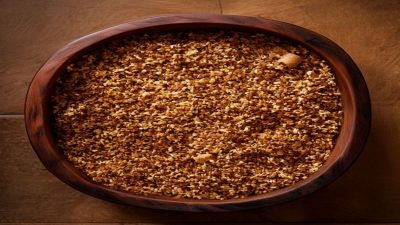
Corncob litter is made of dry corncob particles, which has a strong grainy feel and good water absorption. The biggest advantage is that it does not stick to hair and is suitable for long-haired hamsters. However, corncobs are prone to mold and must be replaced frequently in humid environments, otherwise bacteria will breed.
Advantages: non-sticky to hair, good graininess, natural materials
Disadvantages: easy to mold, average warmth retention, medium price
How to choose bedding materials for different hamsters?
Dwarf Hamster
Dwarf hamsters such as third-line and first-line hamsters are small in size. It is recommended to use a mixture of wood chips and paper cotton. The bottom layer should be wood chips to absorb water and deodorize, and the upper layer should be paper cotton to keep warm and comfortable. The thickness of the bedding must be at least 5 cm.
Golden Bear
Golden bears are large in size and excrete a lot. It is recommended to use wood chips as the main food, combined with paper cotton. The bedding should be at least 8cm thick as silky bears love to dig deep holes. For long-haired golden bears, corn cobs can be considered as their hair does not stick and is easy to take care of.
Precautions for using litter
First, it is best to dry the newly purchased litter in the sun before use to kill bacteria and remove mites. Second, the thickness of the padding must be sufficient. If it is too thin, it will not absorb water and deodorize. Third, replace parts regularly, replace the wet and dirty parts, and replace all parts every 2-3 weeks. Fourth, do not use newspapers, cat litter, or cotton as bedding material, as these are harmful to hamsters.
Many novices struggle with which bedding material to choose. In fact, there is no absolute good or bad. The key is to choose safe materials, lay enough thickness, and change them frequently. If you have a limited budget, choose poplar sawdust, if you want quality, choose paper cotton, and if you want long-haired hamsters, choose corn cobs. Just choose according to your needs.
Related reading
Frequently Asked Questions (FAQ)
How often should hamster bedding be changed?
Partially dirty litter should be replaced every 3-5 days, and all litter should be replaced every 2-3 weeks. The frequency can be increased appropriately in summer.
Can hamsters use cat litter?
Do not use cat litter as bedding material. Cat litter has large particles and chemical components, which are harmful to the skin and respiratory tract of hamsters. Use wood chips or paper towels made specifically for hamsters.
Choose the right bedding material, your hamster will be comfortable and it will be easy for you to take care of it. If you want to know more about hamster product recommendations and feeding knowledge, please follow Hamster Nest!
- The role of hamster bedding
- Comparison of three common litter materials
- Woodchips
- Paper cotton
- Corncob
- How to choose bedding materials for different hamsters?
- Dwarf Hamster
- Golden Bear
- Precautions for using litter
- Related reading
- Frequently Asked Questions (FAQ)
- How often should hamster bedding be changed?
- Can hamsters use cat litter?

I've made so many mistakes buying supplies - cage too small, wheel wrong size... That's why I made the supplies comparison page, so you don't fall into the same traps!